Most clothing doesn’t wear out from one dramatic event — it’s the accumulation of ordinary use: washing, friction, sunlight, the stress of a loaded pocket, time spent crowded on a hanger. None of that is really avoidable if you’re going to wear and wash clothes at all, but a handful of everyday habits can meaningfully slow the pace of wear on the things you own. This is a prevention-focused guide — for reading what a care label’s symbols actually mean, How to Read Basic Clothing Care Labels covers that in detail.
Clothes Wear Out for Several Reasons
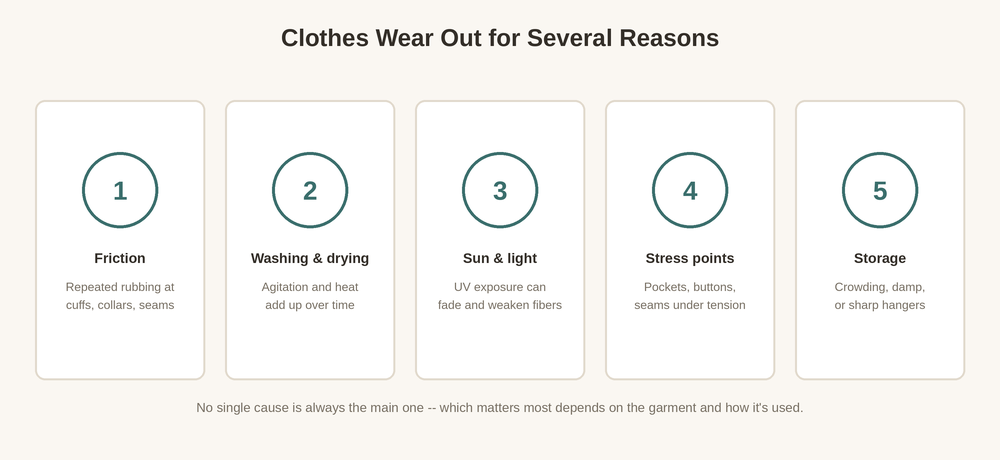
Friction, washing and drying, sun exposure, stress on seams and closures, and how something is stored all contribute to wear in their own way. Which one matters most for a given piece of clothing depends on the fabric, how often it’s worn, and how it’s used — a frequently worn pair of jeans and a lightly worn wool sweater aren’t wearing out for the same reasons, and it isn’t useful to treat one cause as the universal explanation for worn-out clothes in general.
Washing Appropriately, Not Minimally
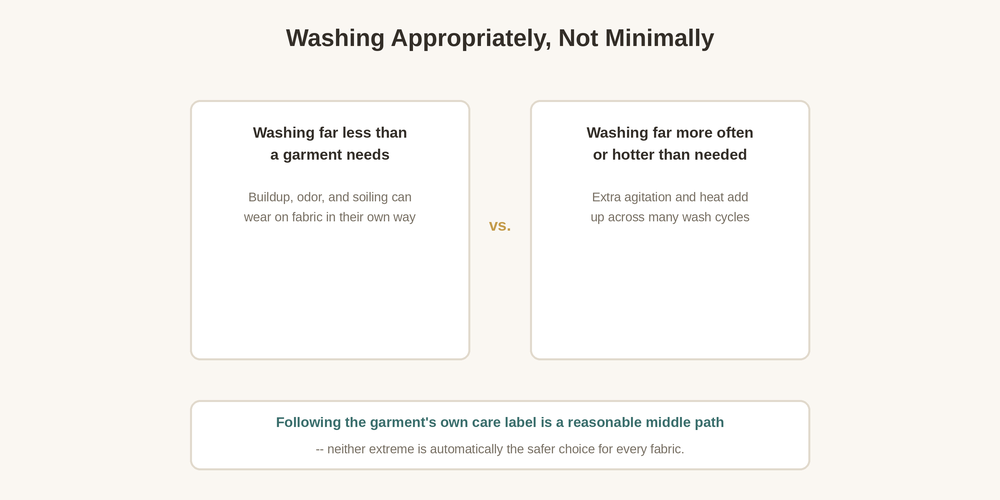
It’s tempting to think that washing less is automatically gentler on clothes, but that’s only part of the picture. Under-washing lets soiling, oils, and odor build up, which can wear on fabric in its own way over time, while washing far more often or hotter than a garment actually needs adds repeated agitation and heat that also takes a toll. Appropriate washing — neither minimal nor excessive — is the more useful target, and the garment’s own care label is generally a more reliable guide to that than a fixed personal rule like “always wash cold” or “wash as little as possible.” If a garment has a repair on it — a patch or a mended seam — protecting that repair while washing involves a few extra considerations of its own; How to Wash Clothes So Repairs and Seams Hold Up covers that specifically.
Notice Friction Wear Points
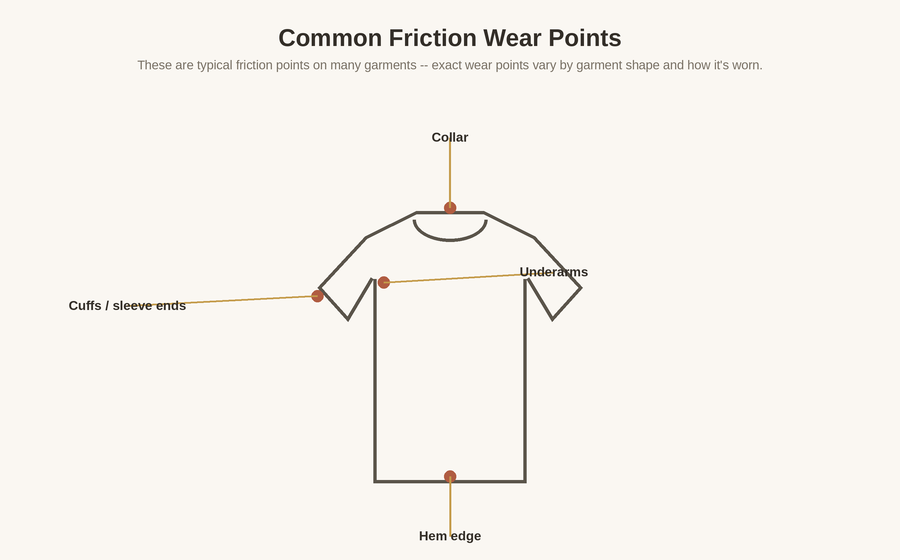
Certain spots on most garments take more repeated rubbing than the rest of the fabric — collars, cuffs, underarms, and hem edges are common examples, though the exact points depend on the garment’s cut and how it’s worn. These areas tend to thin gradually rather than fail all at once, which means there’s often a window where reinforcing the fabric can meaningfully extend its life before a hole actually forms. How to Reinforce Worn Fabric Before It Becomes a Hole covers that process in detail once you notice a spot thinning.
Go Easy on Loaded Pockets
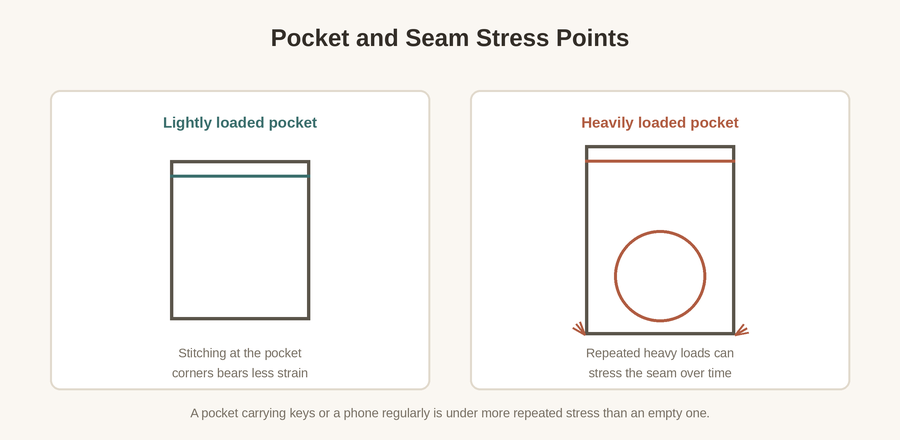
A pocket that regularly carries keys, a phone, or other heavier items is under more repeated stress at its stitching than one that’s rarely loaded, and that stress tends to concentrate at the pocket’s corners. This isn’t a reason to avoid using pockets — that’s what they’re for — but being mindful of how much weight a pocket carries day to day, especially on lighter-weight garments, can reduce how often that seam gets stressed. If a pocket does start coming apart, How to Fix a Pocket That Is Coming Apart walks through repairing it.
Address Small Damage Early
A loose thread, a small snag, or a seam that’s just starting to separate is generally easier to deal with while it’s still small than after it’s had time to spread with continued wear and washing. This guide won’t repeat specific repair steps here — those are covered in their own dedicated articles — but treating early, minor damage as worth a few minutes of attention, rather than something to ignore until it’s worse, is one of the more effective prevention habits overall. For a broader question — whether a specific garment is even worth the effort to repair — When Clothing Can Be Repaired and When It Should Be Replaced can help with that judgment call.
A Few General Storage Principles
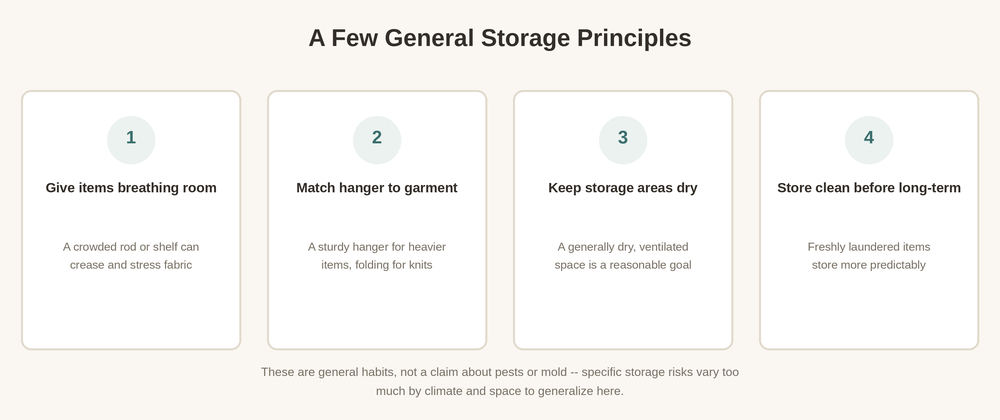
How clothes are stored between wears matters too, though mostly in fairly ordinary ways. Giving items enough space on a rod or shelf reduces the creasing and stress that comes from being crammed in tightly. Using a hanger suited to the garment — something sturdier for a heavier coat, folding instead of hanging for a stretchy knit — avoids stretching items out of shape. Keeping storage areas reasonably dry and ventilated, and storing things clean rather than soiled, are both reasonable general goals. This isn’t a claim about pests or mold specifically — those risks depend heavily on climate, materials, and the specific storage space, which is well beyond what a general guide can responsibly claim.
Rotating Items: An Optional Habit
Wearing the same few items in heavy rotation concentrates wear on those specific pieces, while spreading wear across a larger rotation of clothing can slow how quickly any single item shows it. This is worth mentioning as an option, not a rule — plenty of people wear favorite pieces heavily and that’s a perfectly reasonable choice; rotation is simply one lever available if slowing wear on particular items matters to you.
Quick Reference
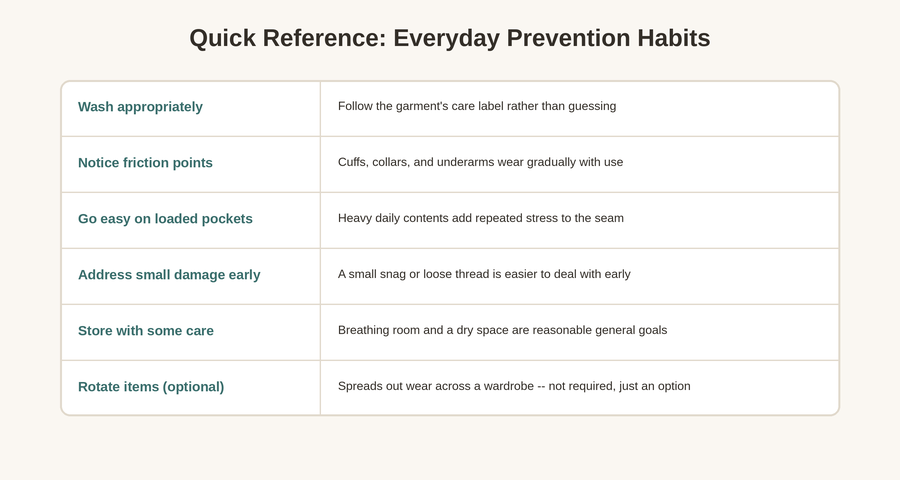
None of these habits require special products or much extra time — they’re mostly a matter of noticing a few things about how clothes get used, washed, and stored, and adjusting in small ways where it’s easy to do so.