By the time fabric actually wears through, it’s usually been thinning for a while first. This article is about catching that earlier stage — fabric that’s clearly weaker than the fabric around it but hasn’t given way yet — and reinforcing it so the area holds up longer. It’s a different problem than a hole that’s already there: How to Fix a Small Hole in a Shirt and How to Repair a Small Hole in Jeans cover repairing damage that’s already happened, while this one is about the fabric that hasn’t quite gotten there yet.
Where Wear Often Shows Up First
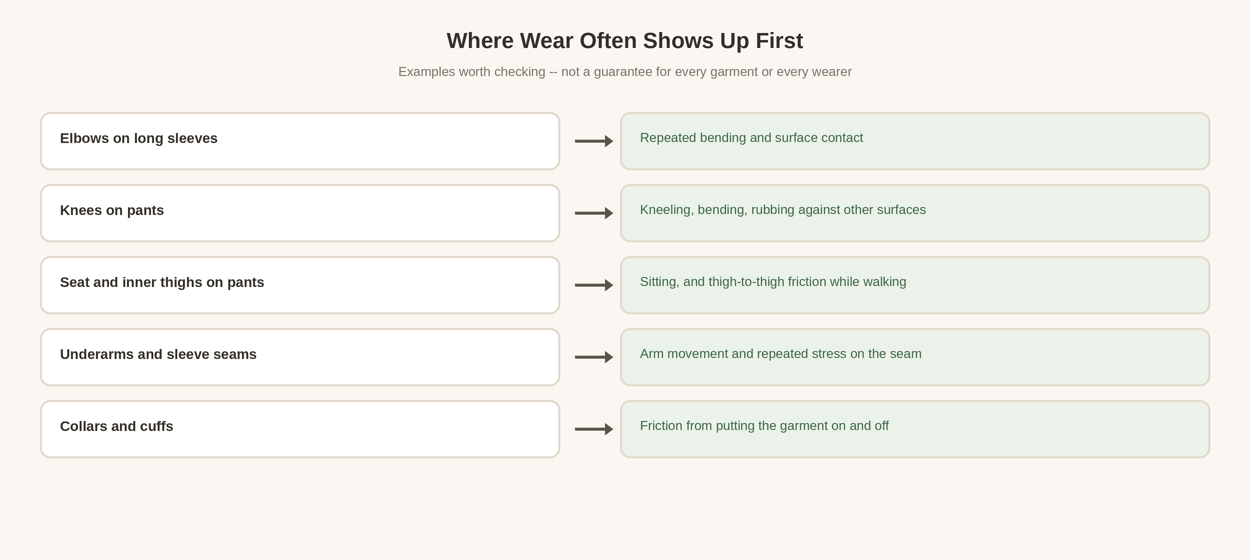
Certain spots take more repeated stress than the rest of a garment, so it’s worth checking them specifically — but how quickly any of them actually wears through depends on the specific fabric, how the garment is worn, and how it’s cared for, so none of these should be read as a guarantee. Worth checking periodically rather than only noticing once a hole has already appeared. Beyond checking periodically, a few everyday habits can also slow how quickly these spots wear in the first place — How to Make Clothes Last Longer: Everyday Habits That Prevent Damage covers that side of things.
Thinning Fabric vs. Surface Fuzz or Pilling
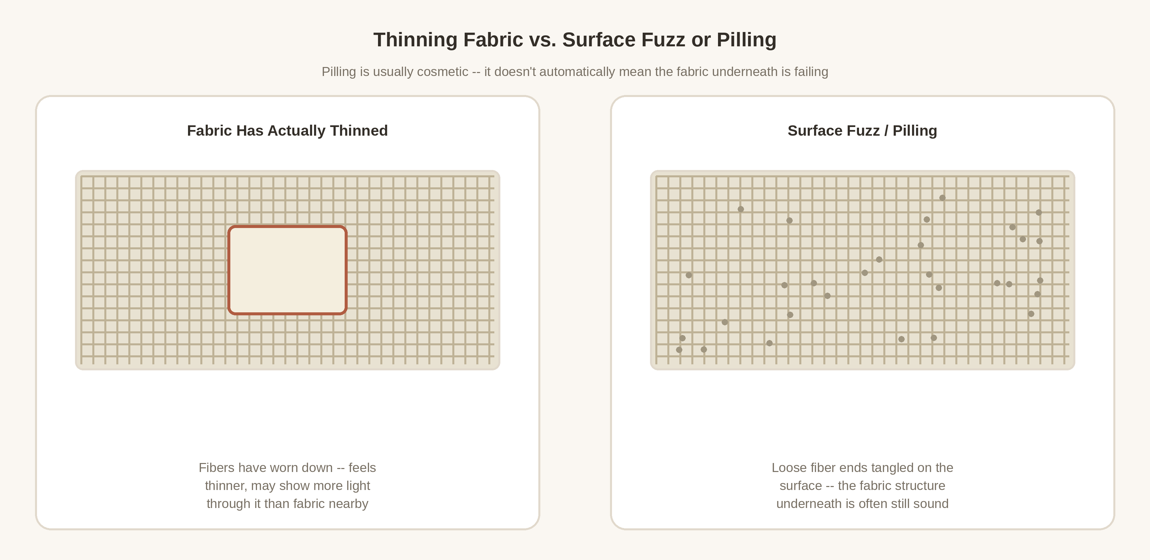
It’s worth telling these apart before deciding anything needs reinforcing. Actual thinning means the fibers themselves have worn down — the fabric feels noticeably thinner than fabric elsewhere on the garment, and held up to light, it may look more translucent than the surrounding area. Pilling or surface fuzz is different: small balls of tangled loose fiber sitting on the surface, which is usually a cosmetic issue rather than a sign the fabric structure underneath has actually weakened. Fuzzy or pilled fabric isn’t automatically fabric that’s about to fail — check by feel and by how much light comes through, not just by how the surface looks.
Support the Weak Zone, Not Just Its Center
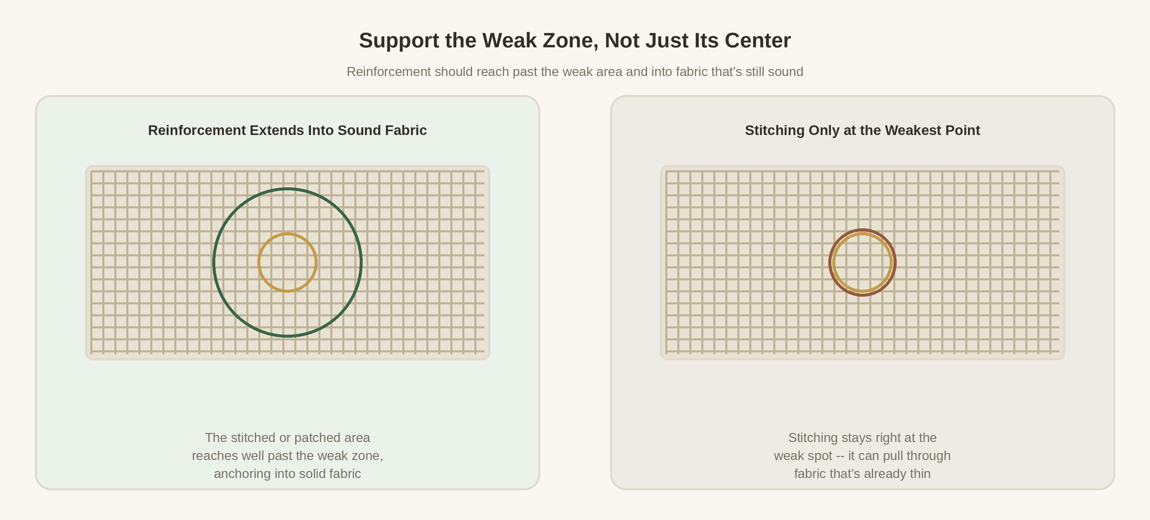
The core idea behind reinforcing worn fabric is straightforward: the reinforcement needs to reach past the thinned area and anchor into fabric that’s still sound, not just stitch through the weakest point itself. Stitching that stays concentrated right at the thin spot has little solid fabric to actually hold onto, and it can pull through fabric that’s already compromised. There’s no single correct margin for how far to extend past the weak area — it depends on how far the thinning actually reaches, how much stress the spot takes, and the fabric itself, so it’s worth checking by feel rather than following one fixed number.
Does the Reinforcement Suit the Garment?
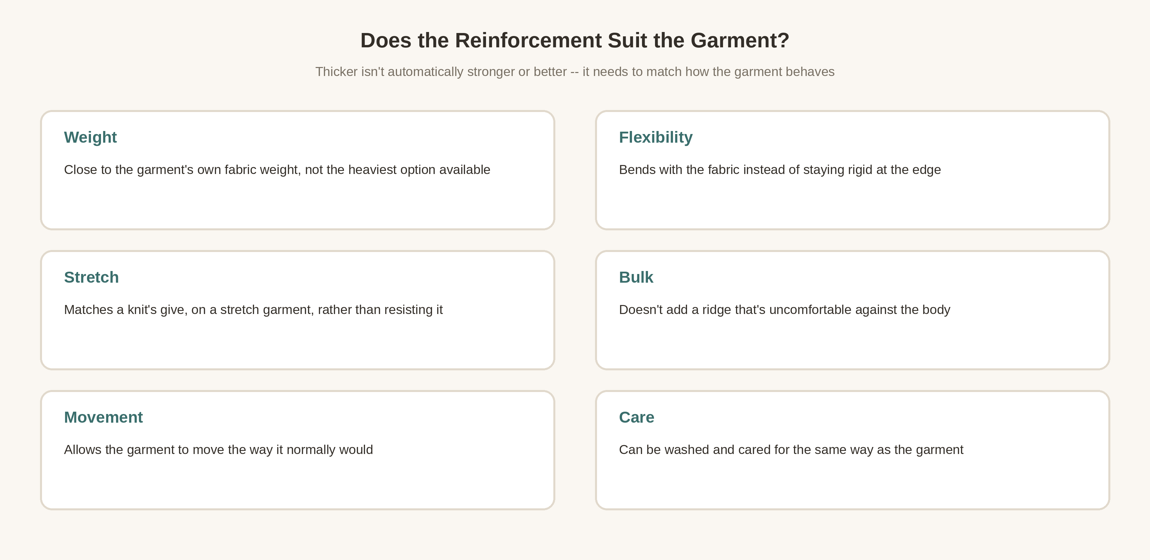
Reaching for the thickest or sturdiest-feeling material available isn’t automatically the right call. What matters more is whether the reinforcement suits the specific garment: its weight relative to the fabric you’re reinforcing, whether it flexes with the fabric instead of staying rigid, whether it matches a stretch fabric’s give, how much bulk it adds, whether it lets the garment move normally, and whether it can be cared for the same way as the rest of the garment. How to Sew a Patch Onto Clothing covers this compatibility question in more depth, along with the actual mechanics of placing, preparing, and attaching a patch, if that ends up being the right approach for what you’re looking at.
Two Preventive Approaches
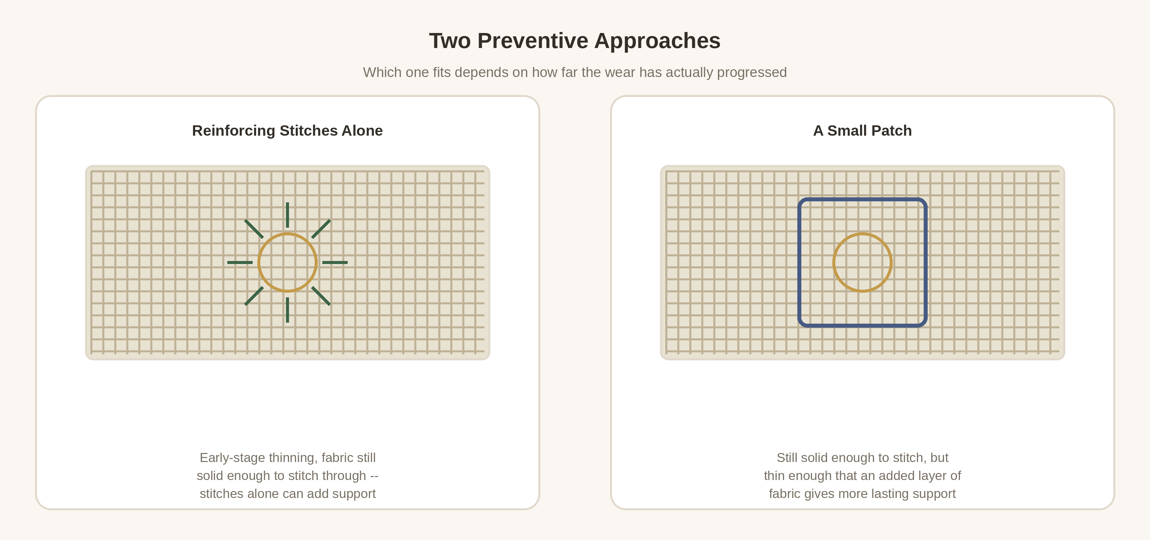
For an early-stage weak spot where the fabric is still solid enough to stitch through directly, reinforcing stitches alone — worked in a pattern that spans past the thin area into sound fabric on each side — can add meaningful support without adding a whole extra layer of material. For fabric that’s thinned further, a small patch behind the area (an inside patch is often the more practical choice here, since the point is support rather than covering visible damage) gives the stitching something more substantial to anchor into. Basic Hand Stitches Every Beginner Should Know covers stitches that work well for this kind of reinforcing work. Which approach fits depends on how far the wear has actually progressed — this is about the “why” of each option; How to Sew a Patch Onto Clothing covers the “how” if a patch is the better fit.
What Reinforcement Doesn’t Promise
Reinforcing a weak spot supports it and can meaningfully extend how long that area holds up, but it isn’t a permanent fix, and there’s no honest way to promise how long it will last — that depends on the fabric, how the garment is used, and how much stress that spot continues to take. Treating a reinforced area as indestructible going forward tends to lead to disappointment; checking on it occasionally is a more realistic approach than assuming the job is done for good.
When This Goes Beyond Reasonable DIY Scope
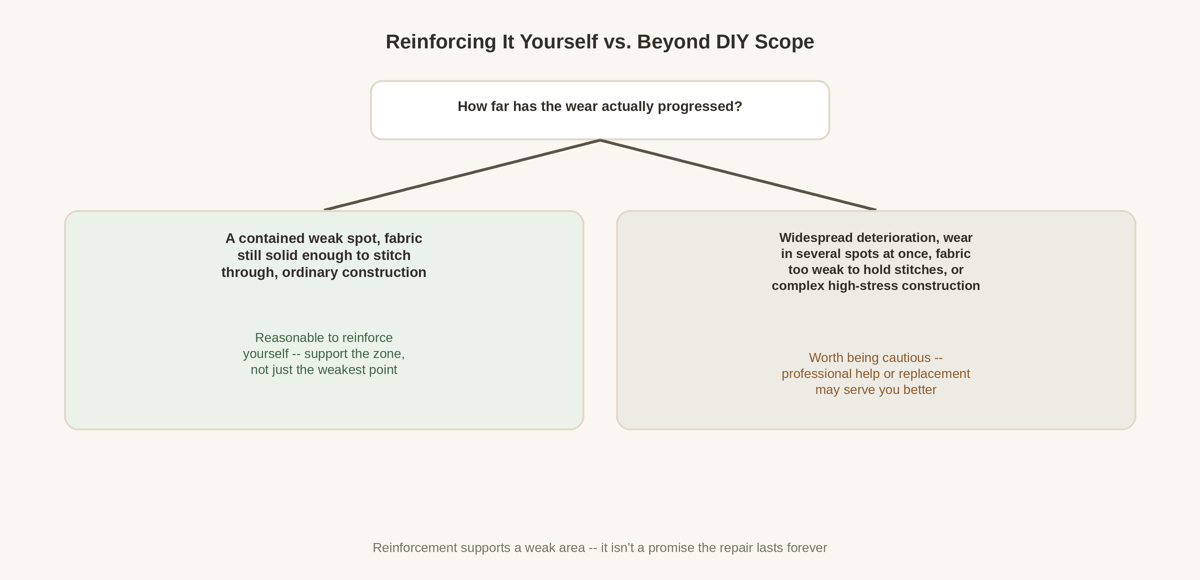
A contained weak spot in fabric that’s still solid enough to stitch through, on an otherwise ordinary garment, is a reasonable project to take on yourself. A few things are worth treating as a signal to slow down and reconsider instead: deterioration spread across a wide area rather than one contained spot, multiple weak points appearing at once, fabric so thin or fragile that it can’t reliably hold a stitch, complex high-stress construction like a crotch seam or a structured jacket area, or reinforcement that would make the area uncomfortably stiff to actually wear. When Clothing Can Be Repaired and When It Should Be Replaced can help you weigh a DIY attempt against professional repair or replacement in those situations.