Finding a tear in a piece of clothing is a common enough moment of frustration, and what you do in the next few minutes matters almost as much as the repair itself. Before reaching for a needle, it helps to slow down and actually look at what you’re dealing with — not every tear is the same problem, and treating them all the same way can turn a fixable repair into a bigger one.
What Kind of Damage Is This, Actually?
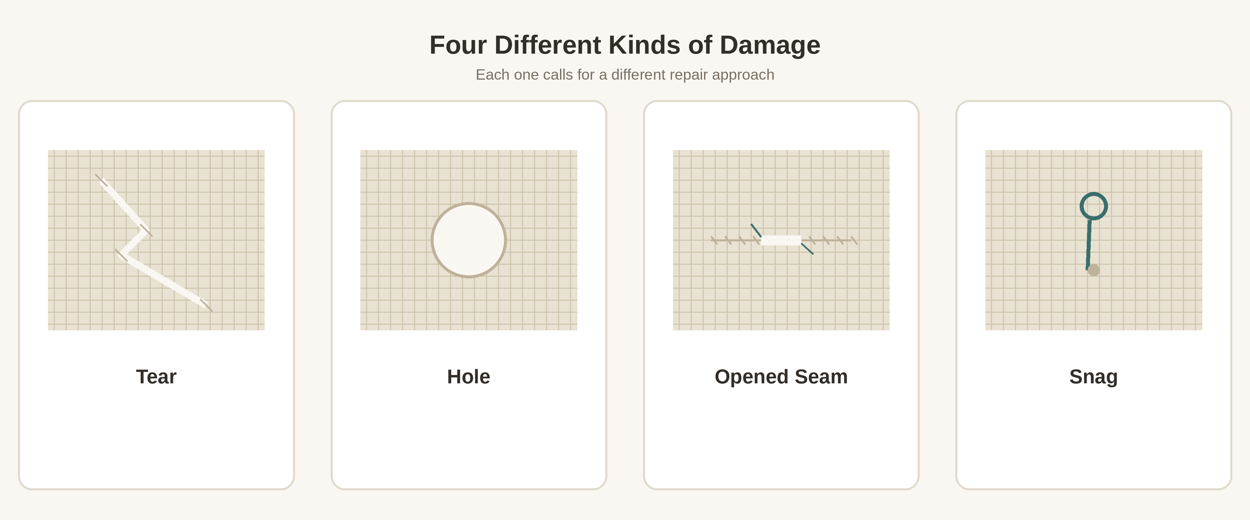
“Tear” gets used loosely, but it’s worth telling a few things apart, because they call for different repairs. A tear is fabric that has ripped, usually along or across the weave or knit structure. A hole means fabric is actually missing or worn through, not just split — How to Fix a Small Hole in a Shirt covers that repair specifically. An opened seam is a construction seam where the stitching has failed and the fabric itself is intact — this is a different repair than mending torn fabric; How to Repair a Torn Seam covers that repair specifically. A snag is a pulled thread or loop, often on knit fabric, that hasn’t broken the fabric at all. If what you’re looking at is actually an opened seam or a snag rather than torn fabric, treating it as a tear can mean more work than the repair actually needs.
Look Before You Stitch
Before doing anything with a needle, take a minute to actually examine the damage. A few things are worth checking: the direction and shape of the tear, whether any fabric is missing or just split, whether the edges are fraying, how the fabric around the tear feels compared to fabric elsewhere on the garment, where on the garment it is, how much stress that area takes during normal wear, and whether the edges come back together on their own without you having to pull or stretch them. This assessment is what the rest of the repair decision is built on.
Don’t Just Pull the Edges Together
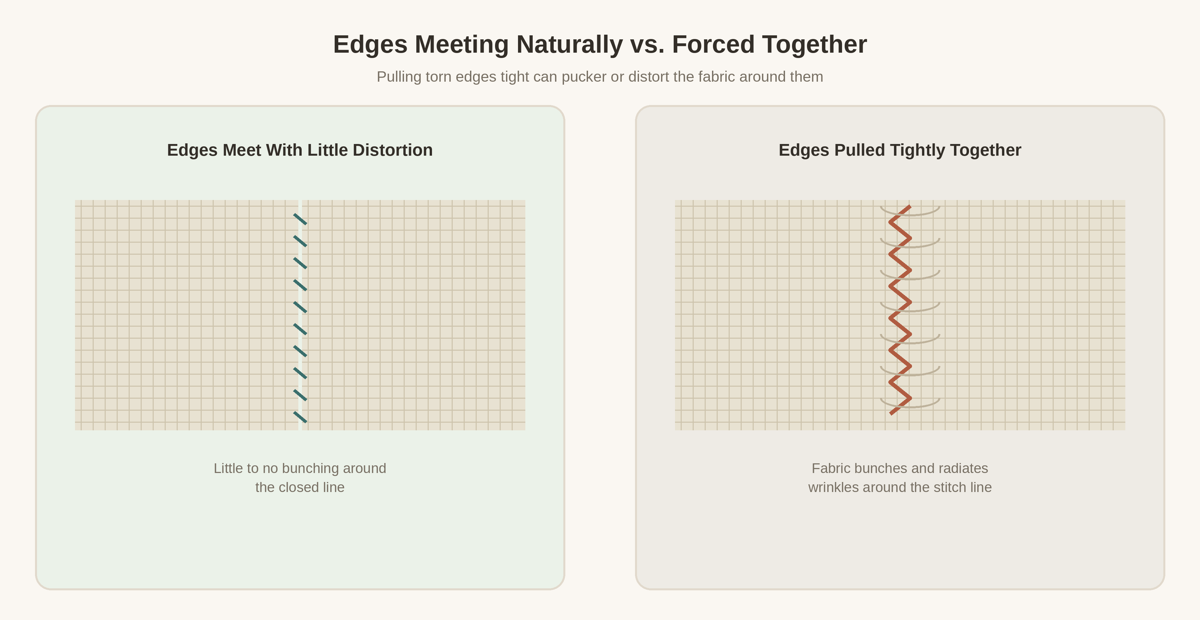
A common instinct is to pull the torn edges together tightly and stitch them shut. This can work against you: forcing edges together that don’t naturally want to meet tends to pucker or distort the surrounding fabric, and it concentrates stress right along the new stitch line — often in the same spot that just failed once already. If the edges come back together with little to no pulling and the fabric around them feels sound, direct closure may be an appropriate approach, depending on how the garment is constructed. If real force is needed to bring the edges together, that’s a sign to reconsider rather than push through it.
Stabilize It Before You Decide Anything
Whatever repair path you end up choosing, there are a few practical things worth doing right away to keep a tear from getting worse while you assess it and figure out next steps: avoid pulling or stretching the damaged area, avoid repeatedly pulling the tear open to “check” it, handle any frayed edges gently rather than picking at them, and if the area is under real stress during normal wear, consider setting the garment aside rather than wearing it until it’s repaired. None of this needs to be dramatic — it’s just avoiding the handling that tends to turn a small tear into a larger one.
Fabric Type Changes the Picture
Woven and knit fabrics behave differently when torn, and that’s worth factoring into how you assess the damage. Wovens (like most cotton shirts or denim) tend to tear along the grain of the weave and generally don’t stretch much, so the torn edges are often fairly stable once damage stops spreading. Knits (like T-shirt jersey or sweater fabric) stretch and can run or ladder from a small snag or tear if it isn’t addressed, in a way that’s a bit different from how a hole spreads on woven fabric. Not every woven fabric behaves identically, and not every knit does either — a tightly woven canvas and a loosely woven gauze aren’t the same, and a stable ribbed knit isn’t the same as a loose, stretchy jersey — but this general distinction is worth keeping in mind before choosing a repair method.
Where the Damage Is Matters
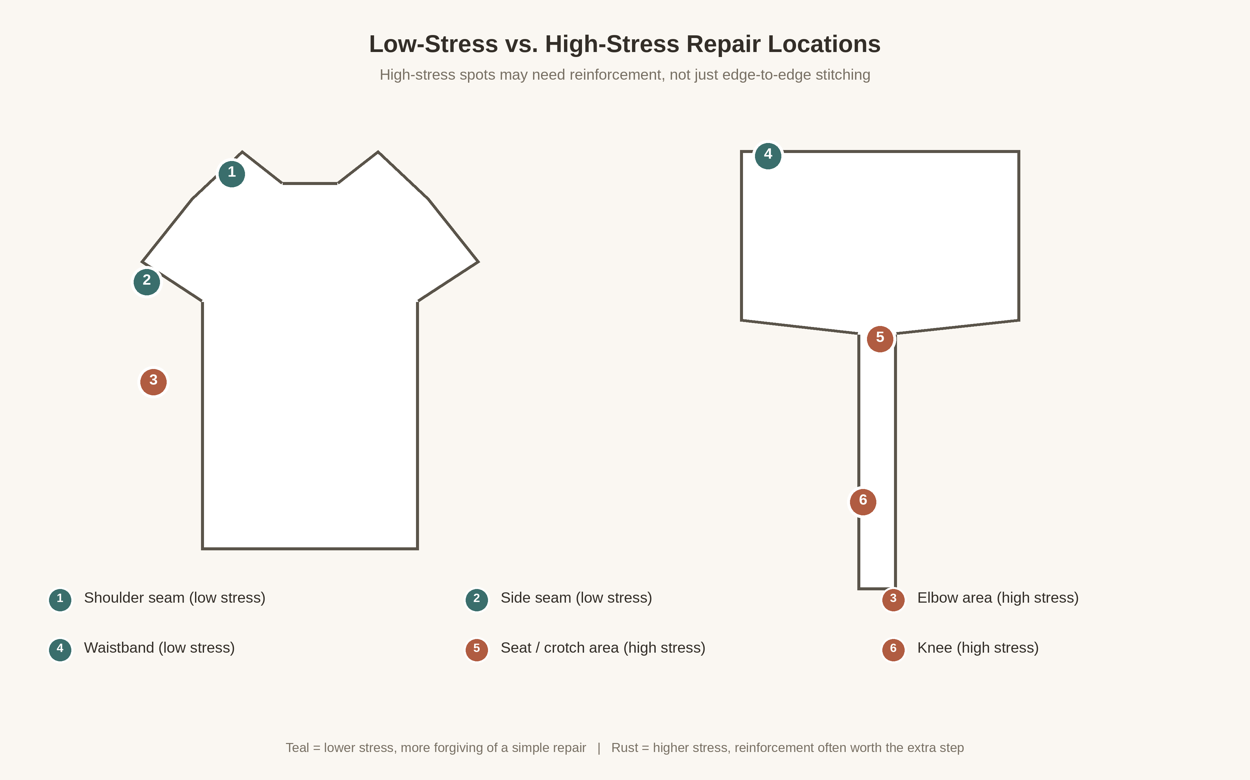
Location changes what a repair needs to hold up to. Areas like knees, elbows, the seat of pants, pockets, and anywhere near a closure take repeated stress and movement, which means a repair there is more likely to need reinforcement underneath rather than simple edge-to-edge stitching alone. That doesn’t mean these spots can’t be repaired at home — plenty of people successfully patch and reinforce knees and elbows — it just means the bar for “is stitching alone enough” is higher in a high-stress spot than it is on, say, a shoulder seam or the inside of a hem that rarely moves.
Check the Fabric Around the Tear, Not Just the Tear
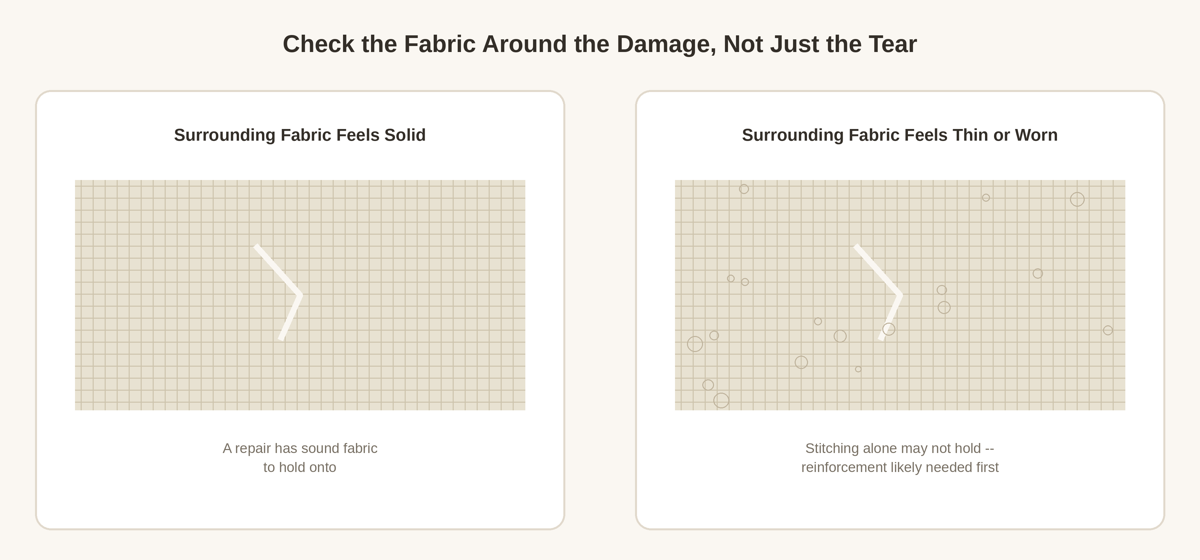
The tear itself is only part of the picture — the fabric surrounding it matters just as much. If that surrounding fabric still feels solid and evenly woven or knit, a repair has something sound to hold onto. If it feels thin, worn, or you notice other small weak spots nearby, stitching alone may not hold for long, because the thread doesn’t have strong fabric to grip. In that situation, some kind of reinforcement or a patch behind the area generally holds up better than repeated stitching through fabric that’s already compromised.
Choosing a Repair Path
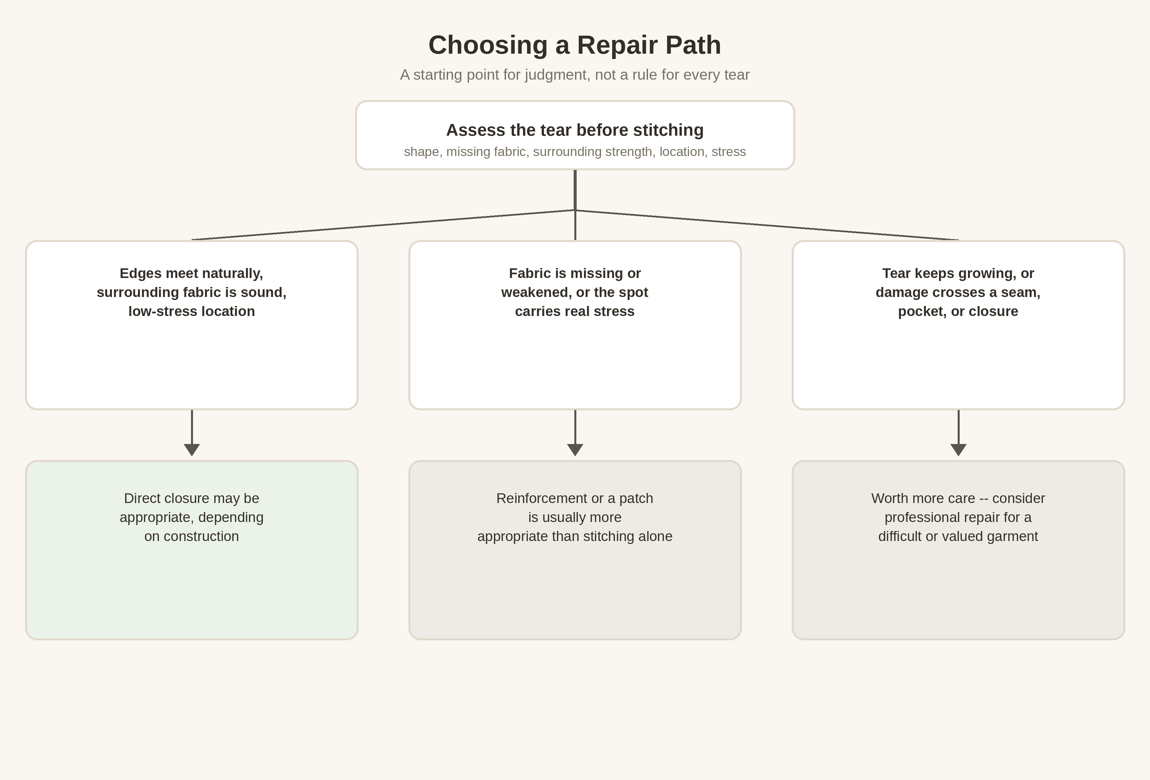
Putting the assessment together: if the edges meet naturally, the surrounding fabric feels sound, and the location doesn’t take much stress, direct closure with hand stitching — Basic Hand Stitches Every Beginner Should Know covers stitches that suit this kind of mending — may be a reasonable approach. If fabric is missing or the surrounding area feels weakened, or the spot carries real stress during wear, reinforcement or a patch underneath is usually the more durable choice over stitching alone. And if the tear keeps growing, crosses a seam or pocket, or you’re dealing with a garment you don’t want to risk, it’s worth slowing down and considering a professional repair rather than pushing forward with a DIY fix on something that matters to you.
When to Reconsider a Simple Fix
A few signs suggest it’s worth stepping back rather than stitching straight through: the tear continues to spread as you handle it, the surrounding material feels noticeably thin or weak, the edges genuinely can’t meet without distorting the fabric, a significant amount of material is missing rather than just split, the damage crosses into a seam, pocket, or other construction detail, or the repair area takes serious stress during normal wear. None of these mean the garment is unfixable — they just mean the repair likely needs more than a few simple stitches, and it may be worth reading When Clothing Can Be Repaired and When It Should Be Replaced before deciding how much effort the repair is worth.
Getting Started
Once you’ve assessed the damage and decided a straightforward repair is appropriate, How to Choose a Sewing Needle for Hand Sewing and How to Choose Thread for Clothing Repairs help you pick suitable tools for the fabric before you start stitching.