A spool of thread doesn’t come with instructions, and most of what’s printed on the label — a fiber name, a number, a color code — doesn’t mean much if you’ve never had a reason to think about it before. For most repairs, one all-purpose thread handles the job without any of this mattering. This guide covers when that’s true, when it isn’t, and how to read enough of a thread label to make a confident choice.
What’s Actually Printed on a Thread Label
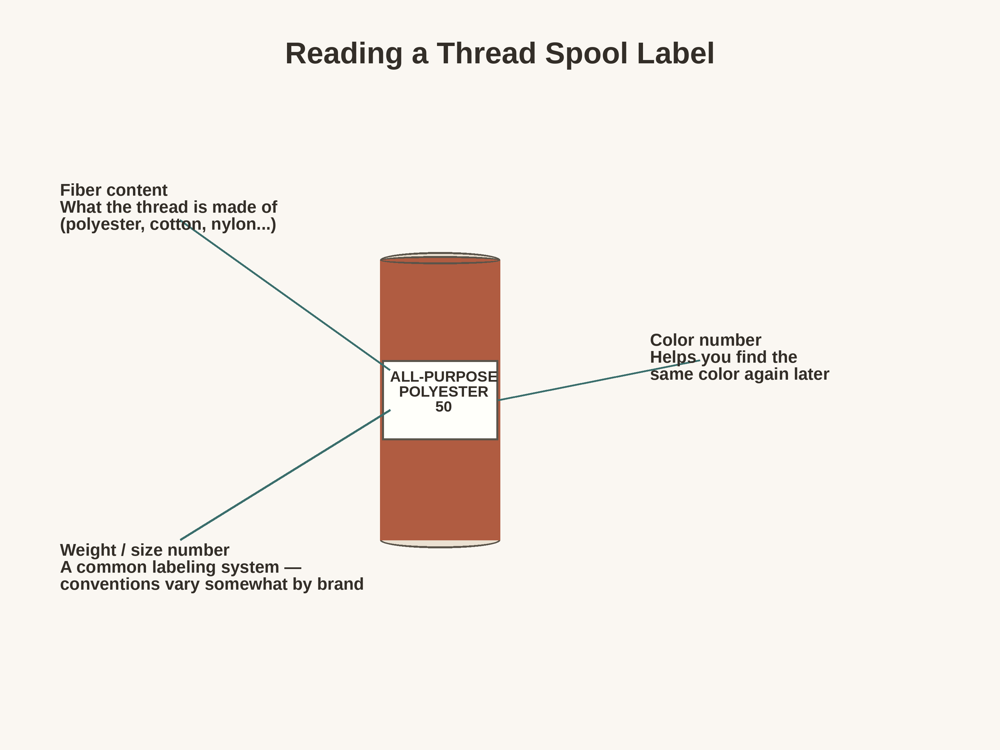
Fiber content. This tells you what the thread is made of — most commonly polyester, cotton, nylon, or silk. Polyester is the most common choice for general clothing repair because it has some stretch and holds up well on most modern fabrics, including blends.
Weight or size number. Many spools are labeled with a number, but that number doesn’t mean the same thing on every spool. A few different labeling systems are used across the thread industry — some (like the common “weight” or “wt” system) use a higher number for a thinner thread, while others (like Tex) use a higher number for a thicker one. Because of this, a number on one spool isn’t reliably comparable to a number on another unless you know which system both are using. For most repairs, this level of detail doesn’t matter — the fiber content and a rough sense of “thin, medium, or thick” from looking at the spool are usually enough to decide.
Color number. This is mainly useful for buying the same color again later, or for finding a matching bobbin thread if you later use a machine. It doesn’t tell you anything about the thread’s thickness or fiber content.
Which Thread for Which Repair
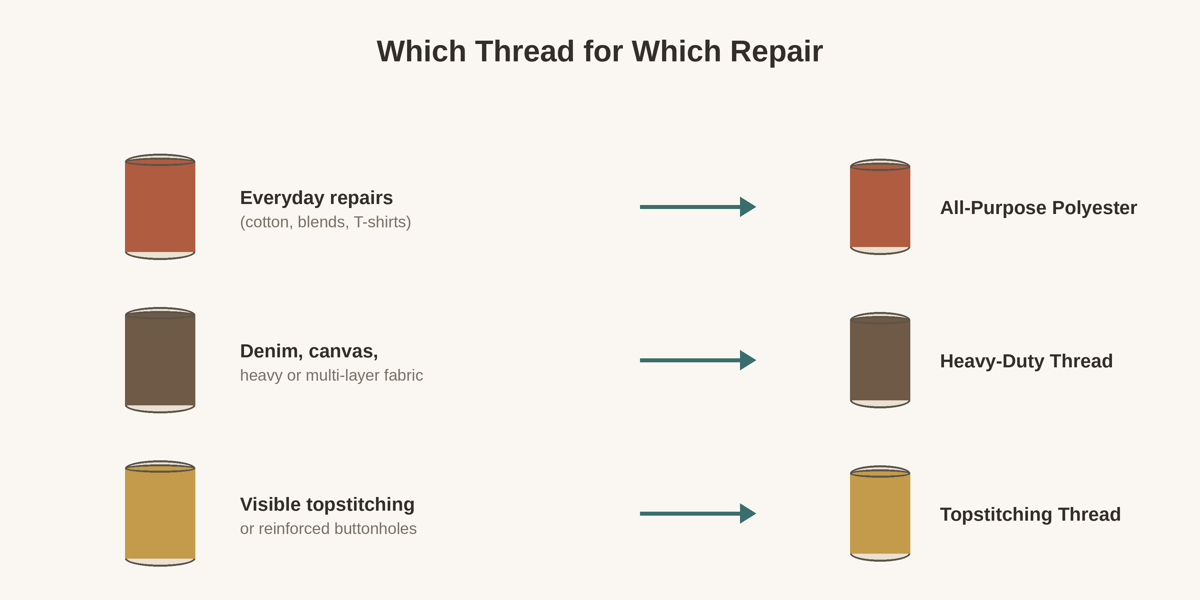
All-purpose polyester thread is the right default for most repairs — buttons, seams, hems, and small holes on everyday clothing like cotton shirts, blends, and knits. If you only buy one type of thread, this is it.
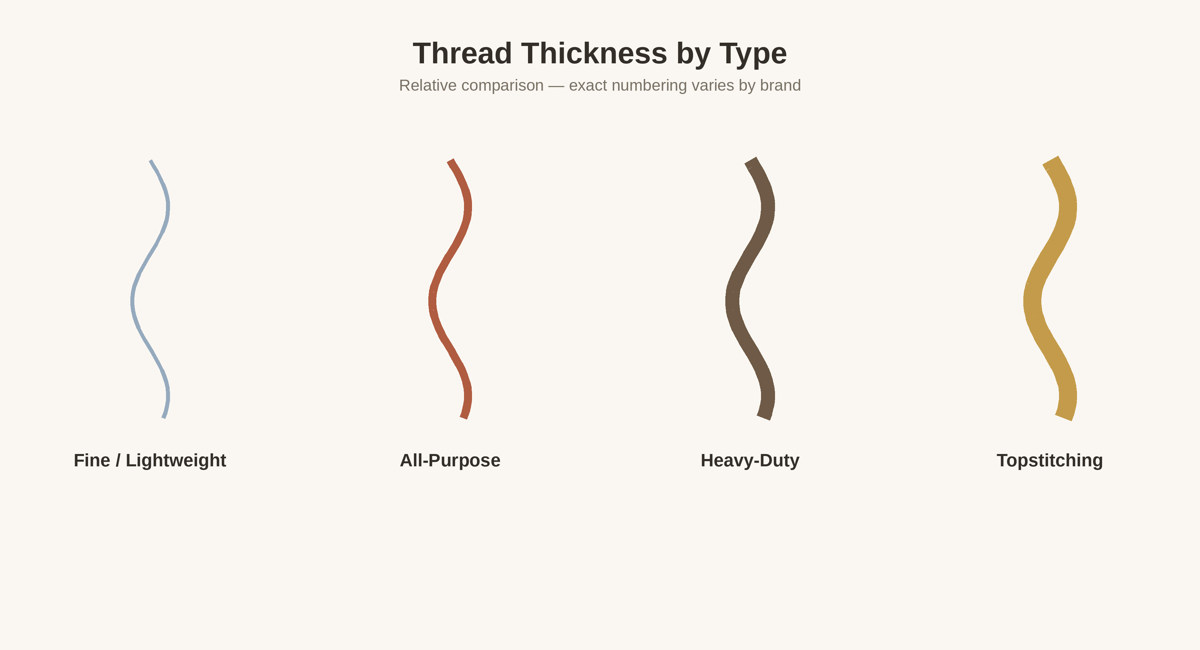
Heavy-duty or upholstery thread is thicker and stronger, and it’s worth reaching for on denim, canvas, or a repair with several layers of heavy fabric stacked together — a standard all-purpose thread can work there too, but it’s more likely to be the first thing that gives out under repeated stress, like at the knee of a pair of jeans.
Cotton thread is a reasonable choice when you specifically want a natural fiber to match a 100% cotton garment, though polyester thread also performs well on cotton fabric for everyday repairs — this is more a matter of preference than a strict technical requirement.
Silk thread is fine and strong for its thickness, and some people prefer it for repairing delicate silk fabric or for basting (temporary stitching you plan to remove later), since it tends to leave less of a mark when pulled out. It’s not necessary for most beginner repairs.
Topstitching or buttonhole thread is noticeably thicker and used for visible, decorative stitching or for reinforcing a buttonhole. It generally won’t fit through the eye of a standard fine sewing needle — you’ll want a needle with a larger eye to match it.
Elastic thread is a specialty product used for shirring (gathering fabric with stretchy rows of stitching) rather than general repair. It’s not something a beginner needs for typical clothing repair work.
Matching Color When You Don’t Have an Exact Match
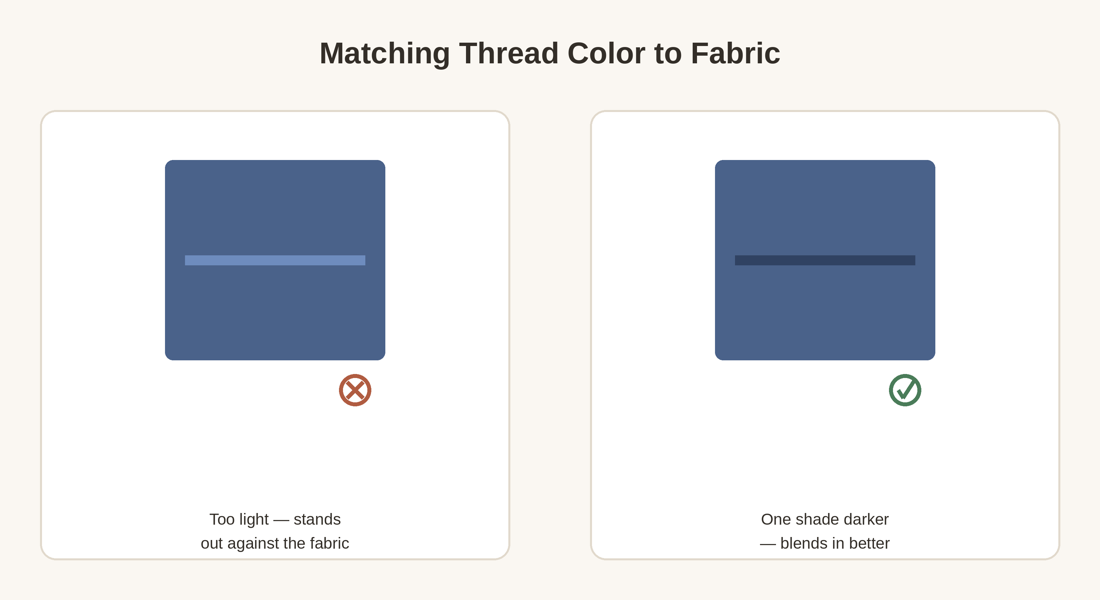
Finding the exact original thread color isn’t always possible. A commonly used rule of thumb is to choose a shade slightly darker than the fabric rather than lighter, since a repair in thread that’s too light tends to stand out more than one that’s a shade too dark. It’s worth holding the spool directly against the fabric in the same light you’ll be sewing in, since thread color can look different under store lighting than at home.
For a repair where blending in matters most, an invisible (monofilament) thread is another option — a very fine, translucent nylon or polyester thread designed to blend into a wide range of fabric colors. It has real limitations worth knowing about: it can feel stiffer than regular thread, some beginners find it more frustrating to work with by hand, and it can be damaged by a hot iron, so it’s not the ideal first choice while you’re still getting comfortable with basic stitching.
Quick Reference
| Thread Type | Best For | Beginner Note |
|---|---|---|
| All-purpose polyester | Most everyday repairs on cotton, blends, and knits | Your default — buy this first |
| Heavy-duty / upholstery | Denim, canvas, heavy or multi-layer fabric | Stronger under repeated stress |
| Cotton | 100% cotton garments, by preference | Not required — polyester works too |
| Silk | Delicate silk fabric, basting | Optional for most beginner repairs |
| Topstitching / buttonhole | Visible decorative stitching, reinforced buttonholes | Needs a needle with a larger eye |
| Invisible (monofilament) | Repairs where blending in matters most | Can be stiff; avoid high heat from an iron |
| Elastic thread | Shirring stretchy rows into fabric | Not for general clothing repair |
Common Mistakes
Using a thread that’s too thin or weak for the fabric and stress it needs to handle is one of the most common reasons a repair fails again quickly — a thin all-purpose thread on a heavily stressed seam, like a jeans knee, is a common example. The opposite problem shows up as thread that’s too thick to fit through your needle’s eye, which can lead to forcing it through in a way that frays the thread or damages the eye.
Old thread that’s been sitting in a kit for years, especially if it’s been exposed to sunlight or humidity, can weaken and become more likely to snap while you’re mid-repair. If a thread breaks unexpectedly and easily during normal use, it’s worth testing a fresh spool before assuming the problem is your technique.
Getting Started
For most first repairs, a spool of all-purpose polyester thread in a close-enough color is all you need. From there, How to Choose a Sewing Needle and How to Thread a Needle cover the remaining two decisions before your first stitch.