A “snag” gets used loosely — for a pulled thread, a loose seam, even a small hole — but treating the wrong one as a snag can mean the wrong fix or wasted effort. This article is about figuring out whether what you’re looking at is actually a snag, and if so, gently working it back into place without stretching, cutting, or forcing anything. It’s not about restoring the fabric to how it looked before the snag happened — a careful repair usually makes it less noticeable, not invisible.
What You’re Actually Looking At
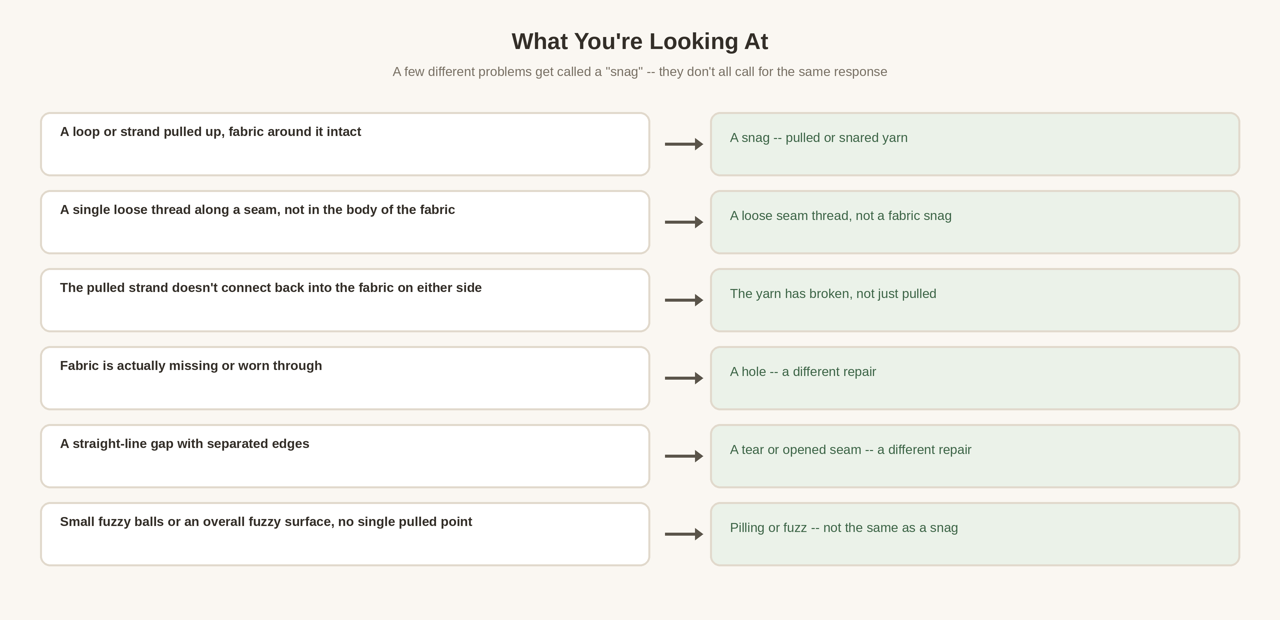
A true snag is a loop or strand of yarn that’s been pulled or snared out of the fabric’s surface, with the fabric around it still intact — nothing is missing, torn, or broken. A loose thread along a seam is a different thing: that’s stitching, not the fabric itself, coming loose. If the pulled strand doesn’t connect back into the fabric on either end, the yarn itself has broken rather than just shifted, which changes what’s realistic to do about it. Fabric that’s actually missing or worn through is a hole, and a straight-line gap with separated edges is a tear or an opened seam — both are different repairs. How to Fix a Tear in Clothing Without Making It Worse covers telling those apart in more detail if what you’re looking at doesn’t quite match a snag. Small fuzzy balls or an overall fuzzy texture with no single pulled point is pilling, which is a different issue with a different cause.
Woven vs. Knit: Why It Behaves Differently
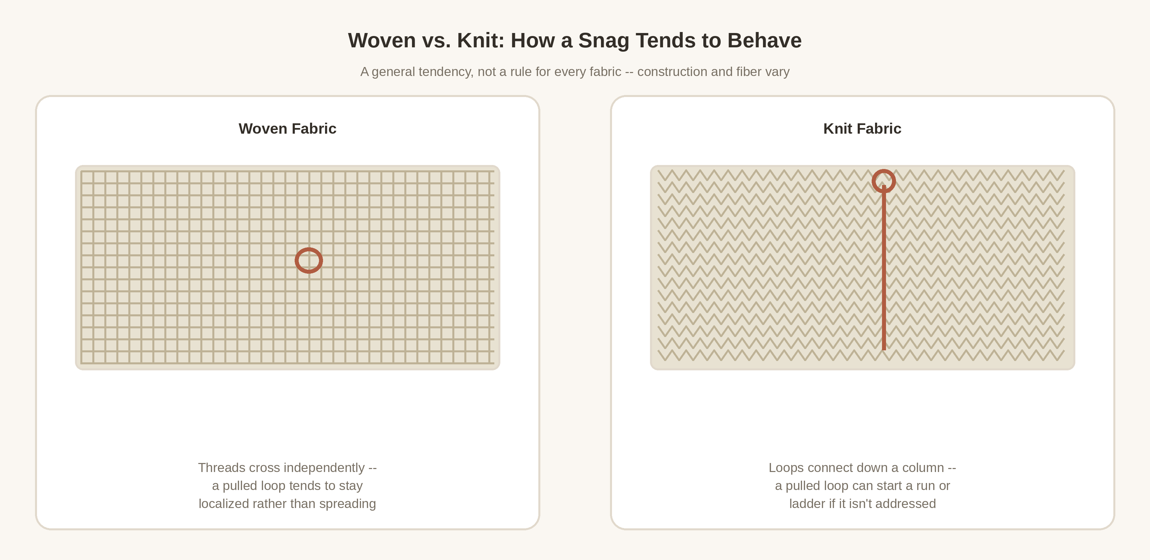
On woven fabric, threads cross each other independently at each point, so a pulled loop tends to stay fairly localized rather than affecting fabric further away. On knit fabric, loops connect to the loops above and below them in the same column, so a pulled loop can start a run or ladder down that column if it isn’t addressed — similar to a stocking run. This is a general tendency rather than a guarantee for every fabric: a tight, stable knit and a loose, stretchy one don’t behave identically, and construction and fiber both matter. Either way, it’s worth working on a snag sooner rather than leaving it to see what happens, especially on a knit.
Start by Not Pulling It Tighter
The instinct to cut off the protruding loop or thread is common, but it’s not the first move worth making. Cutting a snag doesn’t put the yarn back where it came from, and depending on the fabric, it can leave a small gap or a spot that unravels further rather than resolving anything. Before reaching for scissors, take a moment to see whether the loop can be worked back into the fabric instead — that’s usually the better outcome if it’s realistic for what you’re looking at.
Easing the Fabric Around the Snag
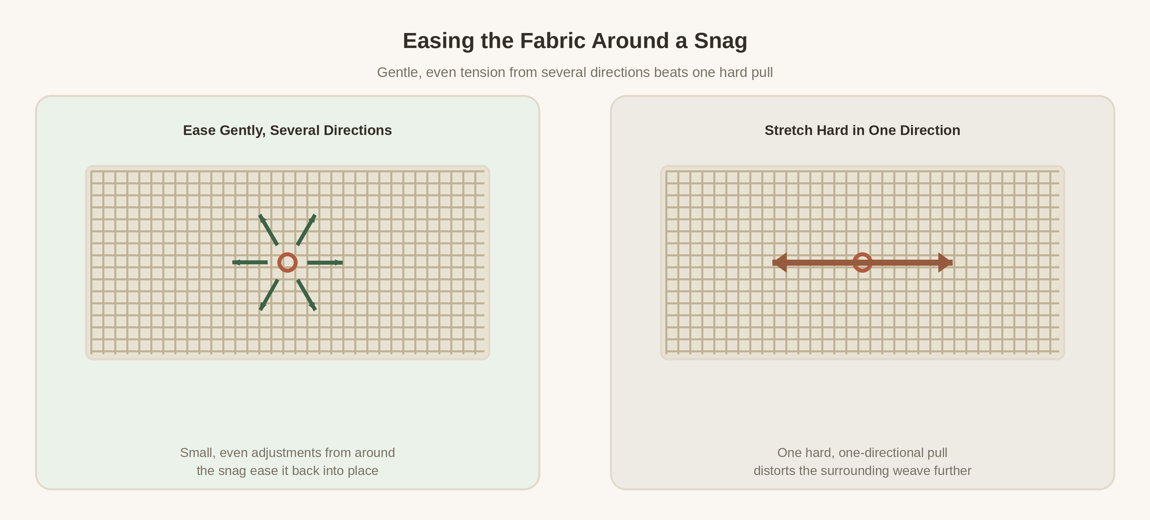
With the garment turned so you can see the pulled area clearly, gently ease the fabric around the snag from a few different directions rather than pulling hard in just one. Small, even adjustments redistribute the tension that’s bunched up around the pulled point and can visibly reduce the puckering on their own, sometimes before you do anything else. Aggressive stretching in a single direction tends to distort the surrounding weave or knit further rather than helping, so keep the movements small and unhurried.
Working Slack to the Wrong Side
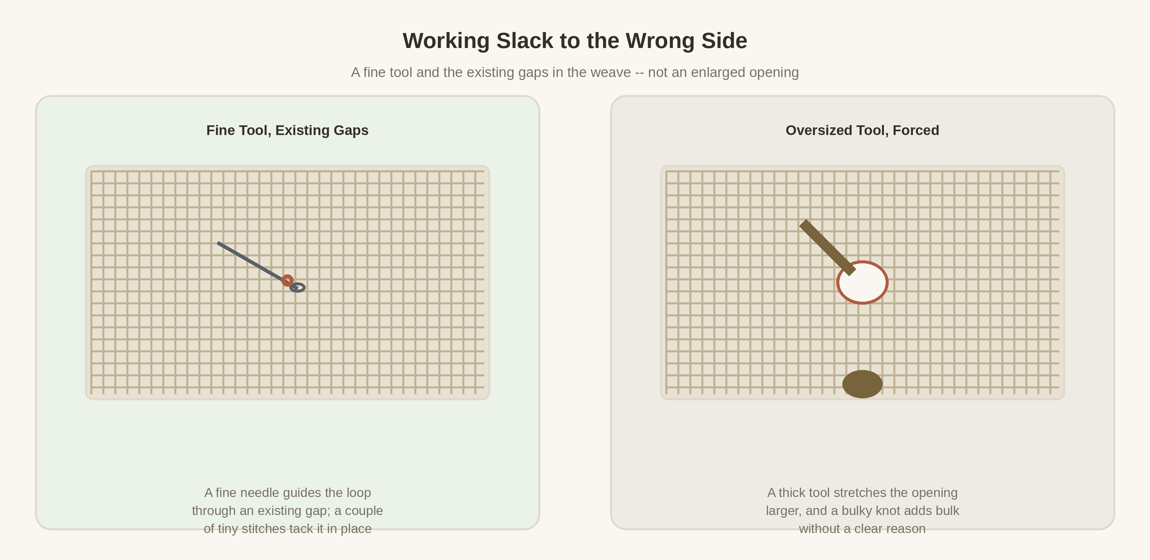
If easing the fabric doesn’t fully resolve it, a fine needle or pin can often guide the remaining slack through to the wrong side, using the gaps that already exist in the weave or knit rather than creating a new one. The goal is to coax the loop through, not to force it — enlarging the opening with a thick or oversized tool tends to create a bigger problem than the original snag. Once the slack is through to the wrong side, a couple of small tacking stitches can hold it in place; there’s rarely a reason for anything as bulky as a large knot unless the specific fabric and repair genuinely call for it. Basic Hand Stitches Every Beginner Should Know covers small stitches like these if you haven’t worked with them before.
If the Yarn Has Actually Broken
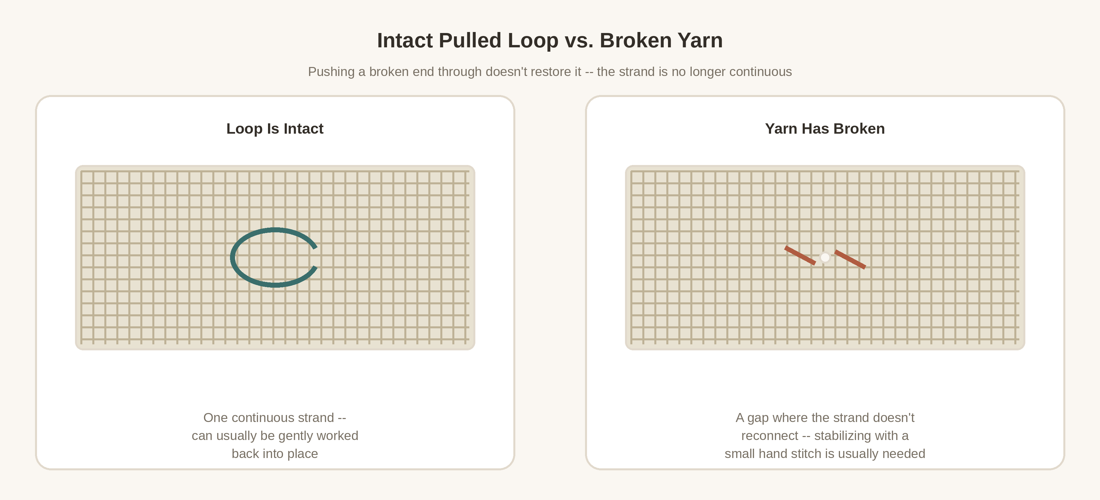
If you look closely and the pulled strand doesn’t connect back into the fabric — there’s a visible gap rather than one continuous piece of yarn — working it to the wrong side won’t restore it, because there’s no longer a continuous strand to work with. In that case, a small stabilizing stitch across the gap, worked from the wrong side, is usually what actually holds the area together rather than trying to hide the break entirely.
Extra Caution on Fine, Loosely Woven, or Expensive Fabric
None of this is impossible on delicate fabric, but it’s worth being more careful. Fine, loosely constructed, or expensive fabric can show handling more visibly, and a loosely woven fabric can be more prone to further pulling if it’s handled roughly. Work slower, use a finer needle, and consider a smaller test movement before committing to a bigger one. How to Choose Thread for Clothing Repairs covers matching thread weight and color to the fabric, including a note on when a fine or invisible thread might be worth considering for a stabilizing stitch that needs to blend in.
What to Expect When You’re Done
A careful repair on an intact pulled loop often leaves the area looking noticeably better — less puckered, less distorted, easier to overlook — rather than completely undetectable. That’s a reasonable outcome to aim for. Expecting the fabric to look exactly as it did before the snag happened tends to lead to overworking the area, which usually makes things worse rather than better.
Deciding What’s Worth Doing Yourself
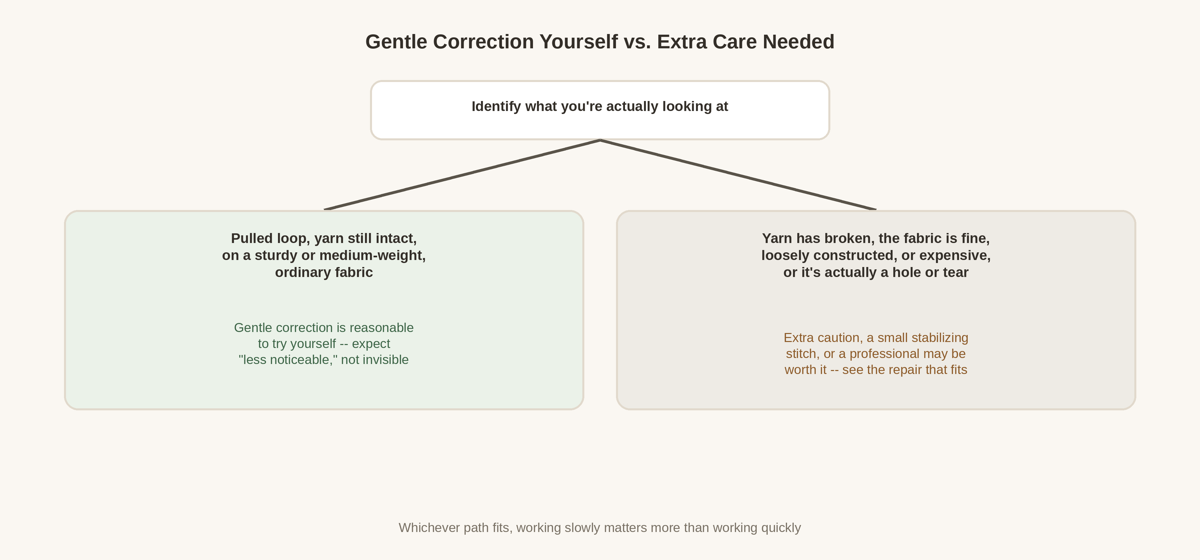
A pulled loop with intact yarn on a sturdy or medium-weight, ordinary fabric is reasonable to work on yourself, with patience. Broken yarn, fine or loosely constructed or expensive fabric, or something that turns out to actually be a hole or a tear calls for more caution, and sometimes for a different repair or a second opinion entirely. Whichever situation you’re in, working slowly and checking your progress as you go matters more than how quickly you finish.