A zipper that’s stuck, separating, or missing a part can feel like it demands force, but that instinct is usually the wrong one. This article is about figuring out what’s actually wrong, trying the low-risk fixes that make sense for that specific problem, and recognizing when the issue has moved past what a quick DIY adjustment can reasonably fix. It’s not a guide to installing or fully replacing a zipper — that’s a more involved project than what most zipper problems actually call for.
Zipper Anatomy
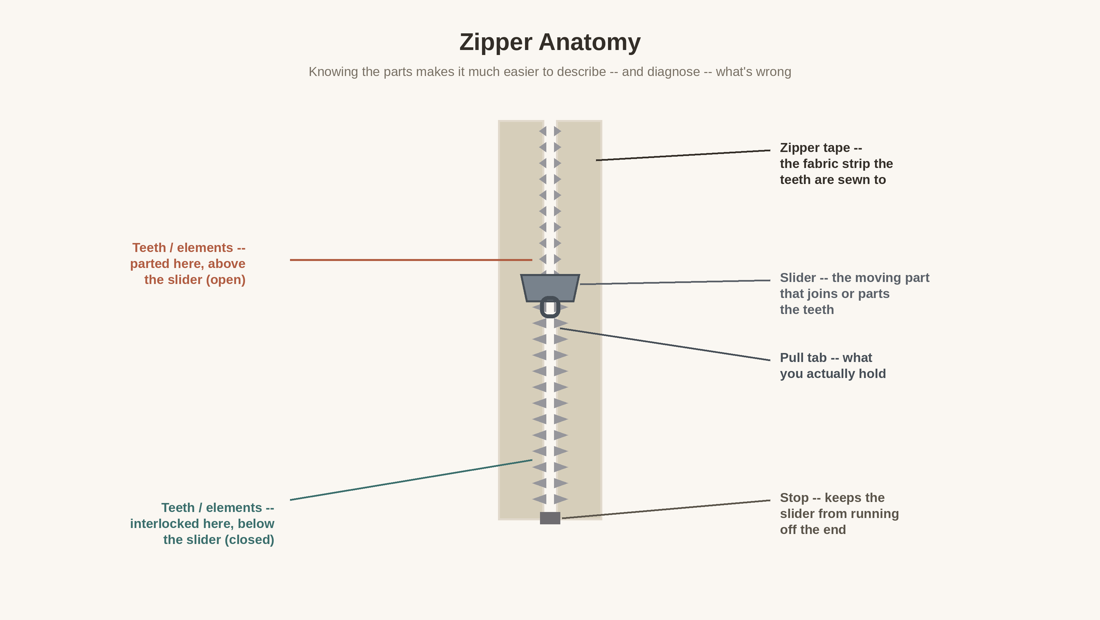
A few terms are worth knowing precisely, because they make diagnosis much clearer. The teeth, or elements, are the individual interlocking pieces. The slider is the moving part that travels along the teeth, joining or parting them as it goes. The pull tab is the small piece attached to the slider that you actually hold and pull — it’s not the same thing as the slider itself, even though people often use “zipper pull” loosely for both. The zipper tape is the fabric strip the teeth are sewn to. The stops are the small pieces at the top and bottom that keep the slider from running off the end entirely.
What You’re Seeing Points to Where to Look
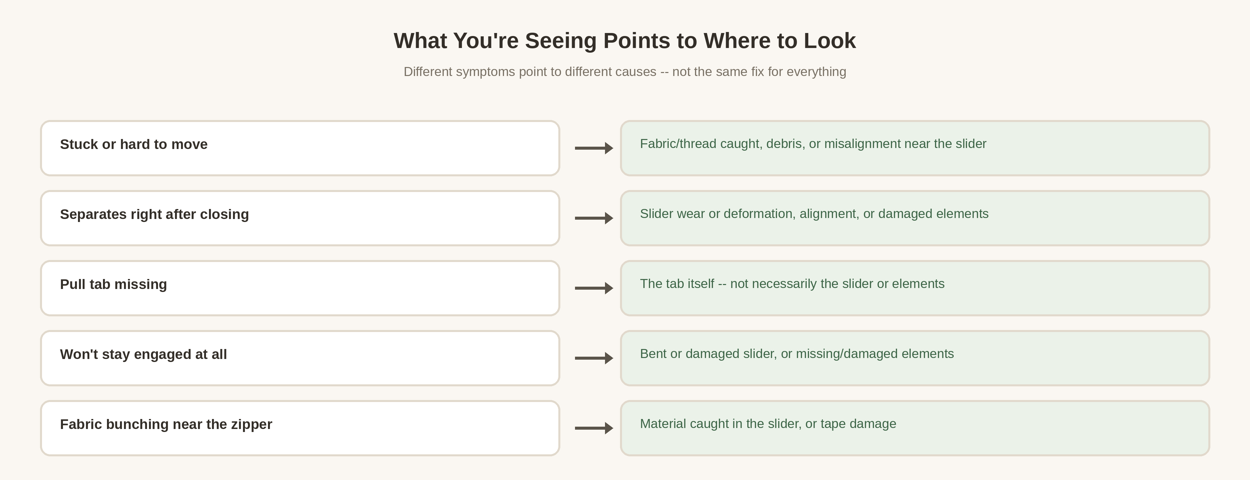
Before touching anything, take a moment to actually inspect the zipper: look for fabric or thread caught in the slider, visible debris, misalignment, damaged or missing elements, a bent or damaged slider, damaged tape, or a zipper that closes but immediately separates again behind the slider. Different symptoms point to different causes, and the fix that makes sense for one usually isn’t the fix that makes sense for another.
Fabric Caught in the Slider
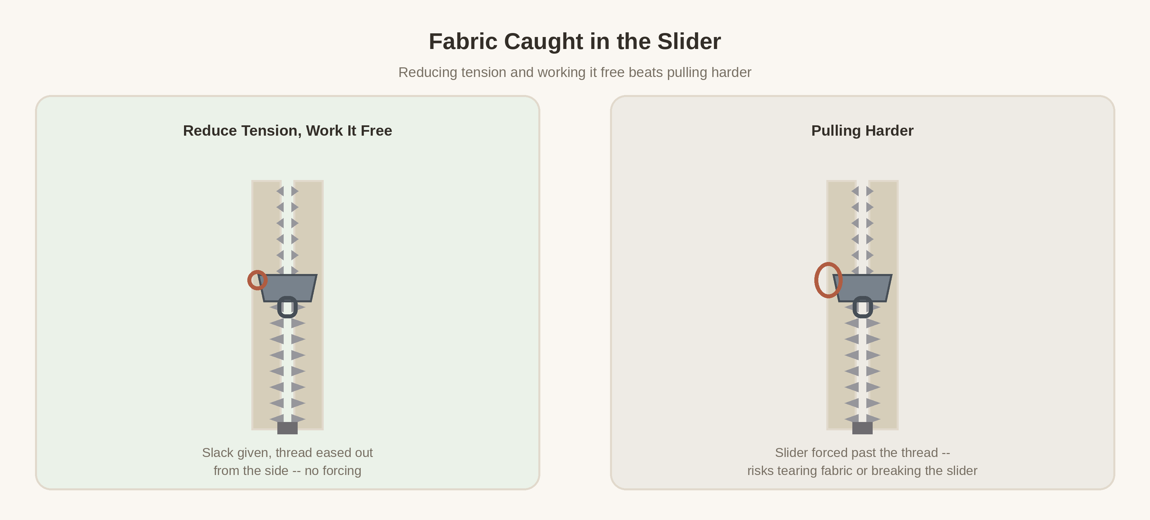
If a zipper is stuck because fabric or thread has caught in the slider, stop pulling harder — that’s the single most useful thing to do first. Reduce tension on the garment, look closely at exactly where the material is trapped, and gently work it free rather than dragging the slider forcefully through it. If there’s loose thread involved, remove it carefully once you can see what you’re doing. Cutting the garment fabric isn’t a routine solution here, and pushing a sharp tool in blindly near fabric you can’t clearly see is more likely to cause new damage than to solve the original problem.
A Note on Lubrication
It’s tempting to reach for a household lubricant on a stiff zipper, but that’s worth being cautious about. Diagnosis, cleaning, and realignment are worth trying first, before adding any substance to the zipper. If you do consider a lubricant, think about staining, residue, how it interacts with the specific fabric and zipper material, and the garment’s care requirements — none of these are universal across every garment or every zipper, so there’s no single product that’s safely appropriate for all of them. Oils and greasy products in particular aren’t something to reach for casually.
Closes at the Slider, but Opens Behind It
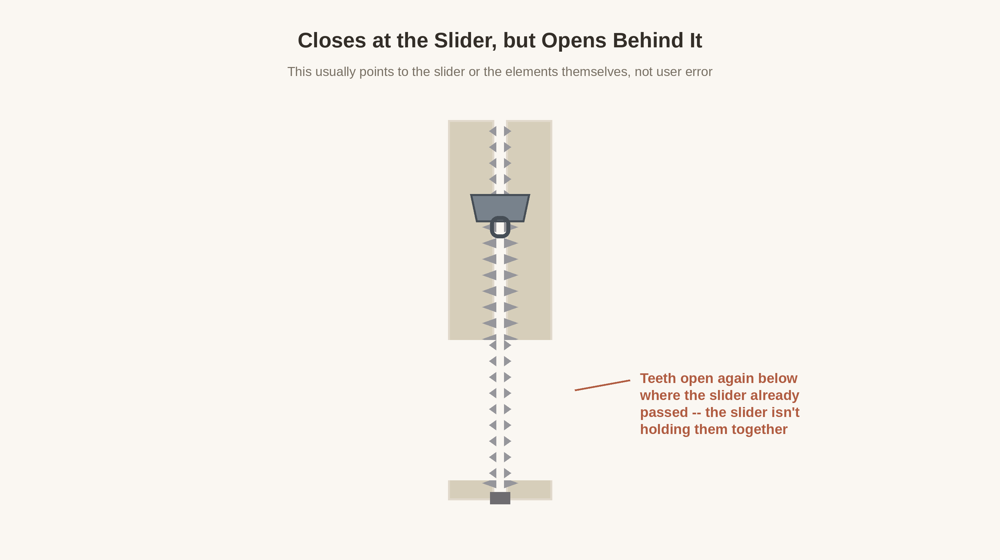
When a zipper appears to close as the slider moves but then separates again behind it, the cause is usually the slider itself — wear, deformation, misalignment, or damaged elements — rather than anything you’re doing wrong. Some guides suggest gently squeezing the slider with pliers to correct this, but that’s not something to treat as a universally safe fix: too much pressure can deform or break the slider further, turning a minor issue into a bigger one. If a very light, cautious adjustment seems worth trying, it’s worth clearly understanding that as a limited, temporary measure — not a substitute for replacing a slider that’s genuinely worn or damaged. In a lot of cases, slider replacement ends up being the more appropriate answer.
Missing Pull Tab vs. Broken Slider
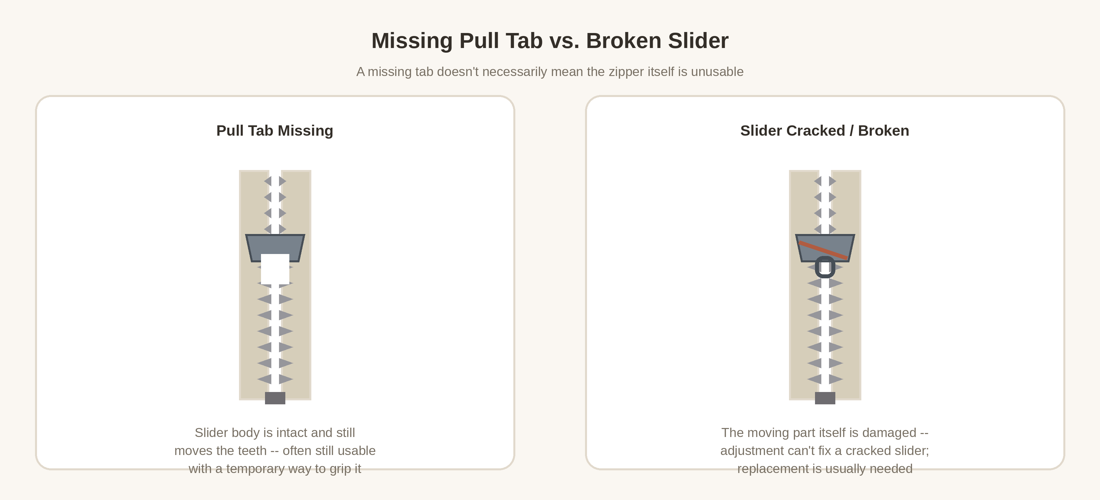
These are two different problems, and it’s worth keeping them separate. A missing pull tab doesn’t necessarily mean the whole zipper is unusable — if the slider body itself is intact and still moves the teeth properly, a conservative temporary way to grip it (something you can hold securely without anything sharp or likely to snag the garment) can keep the zipper functional without presenting that as a permanent structural repair. A cracked or broken slider is a different situation: the part that actually does the work of joining and parting the teeth is damaged, and no amount of careful handling restores that — replacing the slider is usually what’s actually needed.
If Elements Are Missing or the Tape Is Torn
When zipper elements are missing or badly damaged, or the zipper tape itself is torn, it’s worth being realistic: a simple DIY adjustment isn’t going to restore reliable function, because adjusting the slider can’t replace structural components that are actually gone or torn. At that point, professional repair, slider replacement, or replacing the zipper entirely may be the appropriate next step, depending on how extensive the damage is.
Jackets: Be Careful With the Bottom Hardware
On jackets and similar garments, the insertion pin and retainer box at the bottom of the zipper are worth mentioning briefly, since problems there are sometimes mistaken for simple slider issues. They’re not the same thing — damage to that bottom hardware can require replacing the affected component or the zipper itself, rather than anything you’d address by adjusting the slider.
When to Reconsider Continued DIY Manipulation
A few signs suggest it’s worth stepping back rather than continuing to work on the zipper yourself: elements are missing, the tape is torn, the slider is cracked or broken, the bottom hardware is damaged, the garment fabric itself is tearing around the zipper, repeated manipulation seems to be making things worse rather than better, or fixing the problem would require substantial disassembly of the garment to reach. If your pocket is having trouble but the zipper mechanism itself checks out fine, How to Fix a Pocket That Is Coming Apart covers pocket-specific failures separately from the zipper itself.
Deciding What’s Worth Your Time
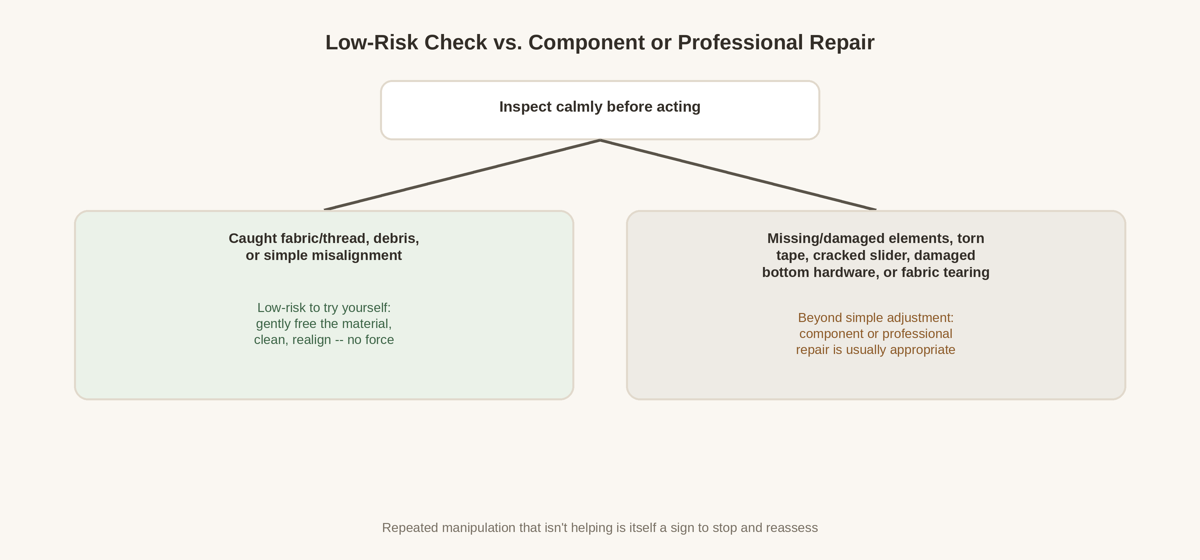
Caught fabric, debris, and simple misalignment are reasonable to work through yourself with care. Missing or badly damaged elements, torn tape, a cracked slider, or damaged bottom hardware generally call for component replacement or professional repair instead. When Clothing Can Be Repaired and When It Should Be Replaced can help you weigh whether it’s worth replacing just the zipper, taking the garment to someone who can, or deciding the garment has reached the end of its useful life.