Not having a sewing machine, or not knowing how to use one, stops a lot of people from attempting a repair they could actually do by hand. At the same time, a machine genuinely does save real time on some jobs. Neither method is better across the board — this is a guide to deciding which one fits the repair in front of you, not an argument for one over the other.
What Hand Sewing Does Well
Hand sewing needs nothing beyond a needle, thread, and the garment itself, which makes it the lower-effort starting point for most small repairs — a button, a short seam, a patch, fixing a hem. It’s also genuinely easier to control in a tight or detailed spot, since you’re guiding every single stitch individually rather than feeding fabric through a machine at speed. The trade-off is time: hand sewing a long, straight seam takes noticeably longer than machine sewing the same seam.
What a Machine Does Well
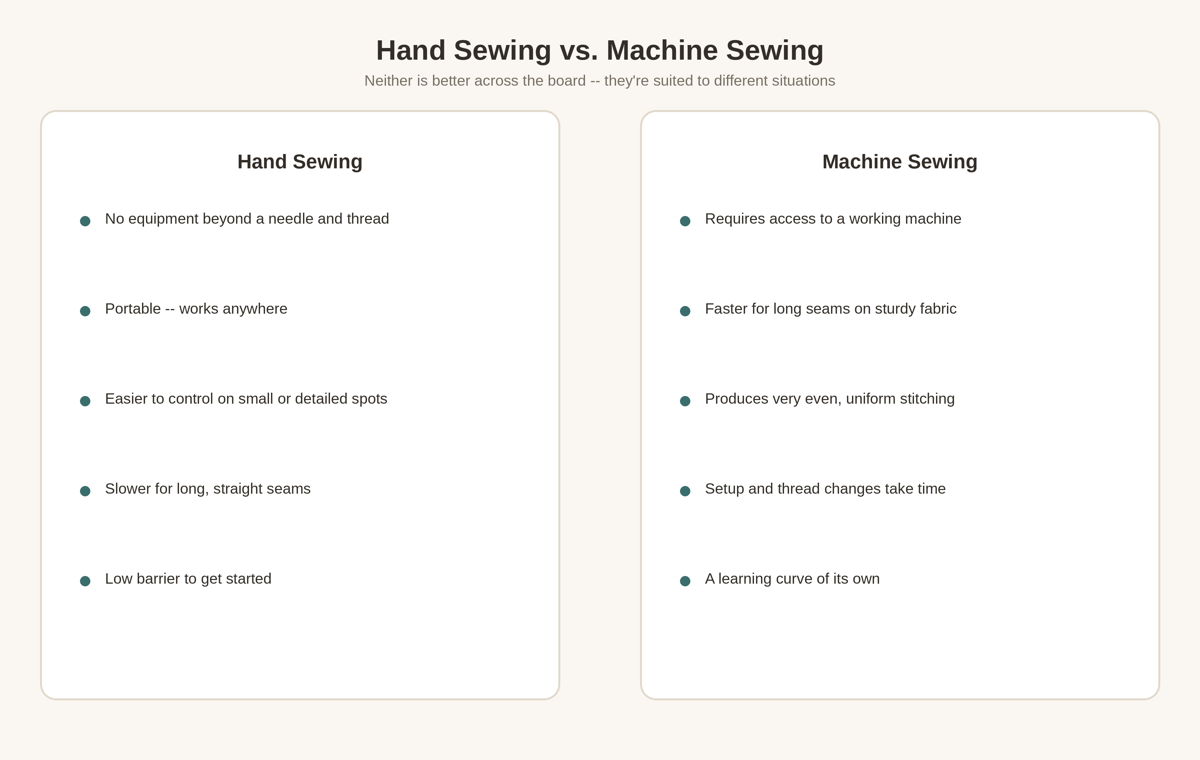
A sewing machine is faster for long, straight seams and produces very even, uniform stitching with less manual effort per stitch. That advantage depends on actually having access to a working machine and knowing how to use it — setup, threading, and adjusting settings for a given fabric all take time and have their own learning curve, which can outweigh the speed advantage for a single small repair.
Factors That Actually Decide It
A few things matter more than a general preference for one method over the other: how long the seam or repair actually is, whether you have a machine available and know how to use it, how much precision and control the specific spot needs, whether the repair needs to be portable (done on the go rather than at a machine), and what the fabric and construction call for. A quick button repair and a long hem on heavy fabric aren’t the same decision, even though both are “just sewing.”
The stitch type, technique, thread, fabric, and how the seam is constructed all affect the actual result more than which tool was used to make the stitches. A well-executed hand stitch on suitable fabric can hold as well as a machine stitch for its purpose; a rushed or poorly chosen stitch, by hand or by machine, won’t.
What Tends to Tip the Decision
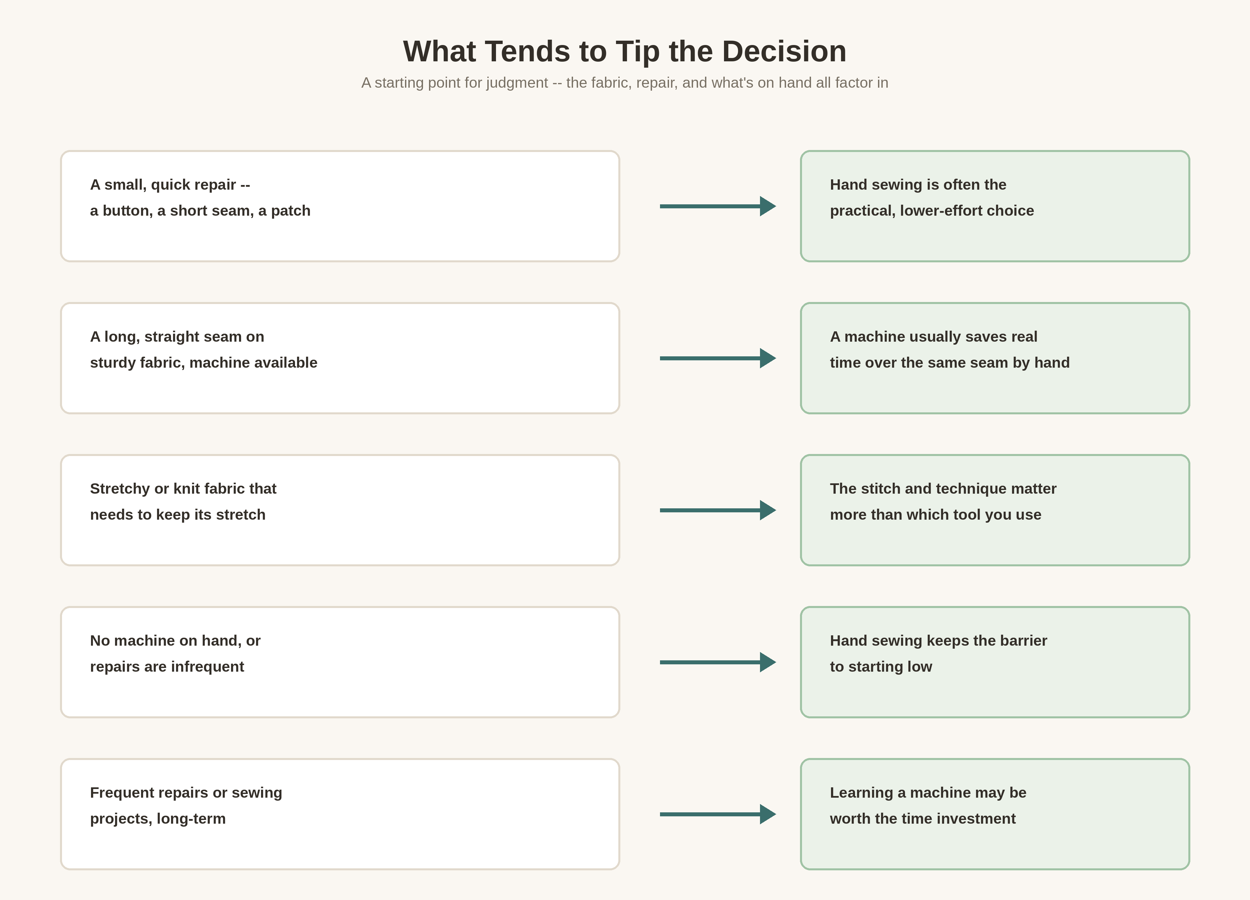
These are starting points, not rules — the specific repair, fabric, and what you have on hand all still matter. A small, quick repair usually doesn’t justify setting up a machine even if one is available. A long, straight seam on sturdy fabric is where a machine’s speed advantage is most real, if you have access to one. Stretchy or knit fabric is a case where the stitch and technique matter more than the tool — a rigid stitch that doesn’t allow for stretch can restrict movement or break under strain whether it’s sewn by hand or on a machine not set up for stretch fabric.
When a Machine Isn’t Necessary
For most one-off clothing repairs a beginner runs into — a button, a small hole, a hem, a popped seam — a machine isn’t necessary. These are jobs hand sewing handles well, and buying or learning a machine specifically to do them isn’t usually worth it if repairs like this are occasional rather than frequent.
When a Machine Becomes Genuinely Useful
A machine becomes more worth the investment of money and time when you’re doing frequent repairs, sewing multiple long seams, working on garment construction rather than just repair, or regularly handling fabric where consistent, even stitching over a long distance matters. If sewing becomes a regular part of what you do rather than an occasional repair, the setup and learning curve pay off over more repairs.
You Don’t Need to Pick Just One
Plenty of repairs mix both, or don’t require choosing at all — a garment that was originally machine-sewn is commonly repaired or finished by hand, since a hand stitch can go exactly where you need it without unpicking or restitching a whole seam. Deciding between hand and machine sewing for a given repair doesn’t commit you to one method for everything you own.
Getting Started
If a repair points toward hand sewing, Essential Sewing Tools for Beginners, How to Thread a Needle (Even With Poor Eyesight), How to Start and Finish Hand Sewing Without the Thread Coming Loose, and Basic Hand Stitches Every Beginner Should Know cover what you need before your first stitch.